

Consultation
Discuss your symptoms and medical history with our specialist.
Laser-based procedures may be considered for selected patients with symptomatic haemorrhoids. A detailed evaluation helps determine whether laser treatment is appropriate based on the severity, symptoms, and clinical findings.
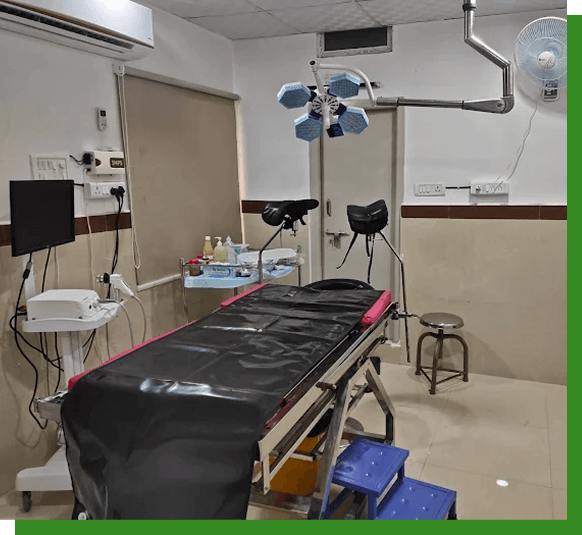
Laser surgery for piles refers to minimally invasive procedures that use controlled laser energy as part of the treatment of selected haemorrhoids. Depending on the technique used and the individual’s condition, it may help address enlarged haemorrhoidal tissue and reduce symptoms.
A laser device delivers controlled energy to the targeted haemorrhoidal tissue, helping treat the affected area with precision while limiting disruption to surrounding tissues.

Controlled laser energy is applied to the selected area.

Treatment may help reduce the size of symptomatic tissue.

May help manage bleeding, swelling, or prolapse in selected patients.

Treated tissue may shrink over time as part of healing.
Laser treatment is not suitable for every patient with piles. It may be considered after clinical evaluation for selected cases.
Symptomatic haemorrhoids – Persistent symptoms such as bleeding, discomfort, swelling, or irritation may require further treatment when conservative measures are not sufficient.
Recurrent bleeding – Patients experiencing repeated bleeding episodes may be evaluated to determine the underlying cause and whether laser treatment is appropriate.
Prolapse associated with haemorrhoids – Haemorrhoidal tissue that protrudes during bowel movements may be considered for treatment depending on its severity and clinical assessment.
Enlarged internal haemorrhoids – Selected internal haemorrhoids with significant enlargement may benefit from a suitable minimally invasive procedure.
Symptoms not adequately controlled by conservative measures – When dietary changes, bowel-habit modifications, medicines, and other supportive measures do not provide sufficient relief, procedural treatment may be considered.
Patients requiring a minimally invasive approach – In selected cases, laser-based treatment may be considered as an alternative to more extensive surgical procedures.
Cases where treatment goals are clearly identified – The procedure is planned according to the individual’s symptoms, haemorrhoid characteristics, and expected treatment needs.
Laser-based treatment may offer several potential advantages for selected patients, including reduced tissue disruption, less post-procedure discomfort, and a quicker return to everyday activities.

A minimally invasive approach for selected cases.

Some techniques are designed to limit tissue disruption.

Some patients may experience less post-procedure discomfort.

Recovery may be relatively quick for selected procedures.

Some patients may resume everyday activities sooner.

Some procedures may be performed as day-care treatment.
Understanding the differences between laser-based and conventional surgery can help you make an informed treatment decision based on your condition, symptoms, and clinical needs.
| Aspect | Laser-Based Treatment | Conventional Surgery |
|---|---|---|
| Approach | Minimally invasive for selected cases | May involve more extensive tissue removal |
| Tissue Disruption | May involve less tissue disruption | Greater tissue disruption in some procedures |
| Post-Procedure Pain | May be lower for selected procedures | May involve greater post-operative discomfort |
| Recovery | May be relatively quick | Can take longer depending on the procedure |
| Suitability | Selected haemorrhoids | May be preferred for certain advanced cases |
From consultation to follow-up, every step is planned around your condition.
Discuss your symptoms and medical history with our specialist.
A private and appropriate examination helps understand the condition.
The severity and type of piles are assessed before recommending treatment.
Treatment is planned according to your individual condition and requirements.
Regular guidance helps monitor recovery and maintain long-term anorectal health.
The procedure is performed in a planned sequence, with careful preparation, controlled laser treatment, and appropriate aftercare guidance.
Make an appointment and get expert guidance for your condition.


Mild, temporary changes may occur as your body heals and gradually returns to normal.
Temporary discomfort may occur during recovery.
Some swelling may occur depending on the procedure.
Temporary changes in bowel habits may occur.
The treated area may remain tender temporarily.
Some minor spotting may occur after treatment.
Return to normal activities according to medical advice.
Proper aftercare can support healing, reduce discomfort, and help you return to your normal routine safely.
We combine ancient Ayurvedic wisdom with modern technology to deliver safe,
effective, and lasting results.

20+ years of expertise in Ayurvedic healthcare.

USFDA-approved laser equipment for better outcomes.

Comfortable treatments with faster recovery.

Recover faster with effective fistula treatment.

Personalized care tailored to your needs.

Quality care with transparent pricing and no hidden costs.
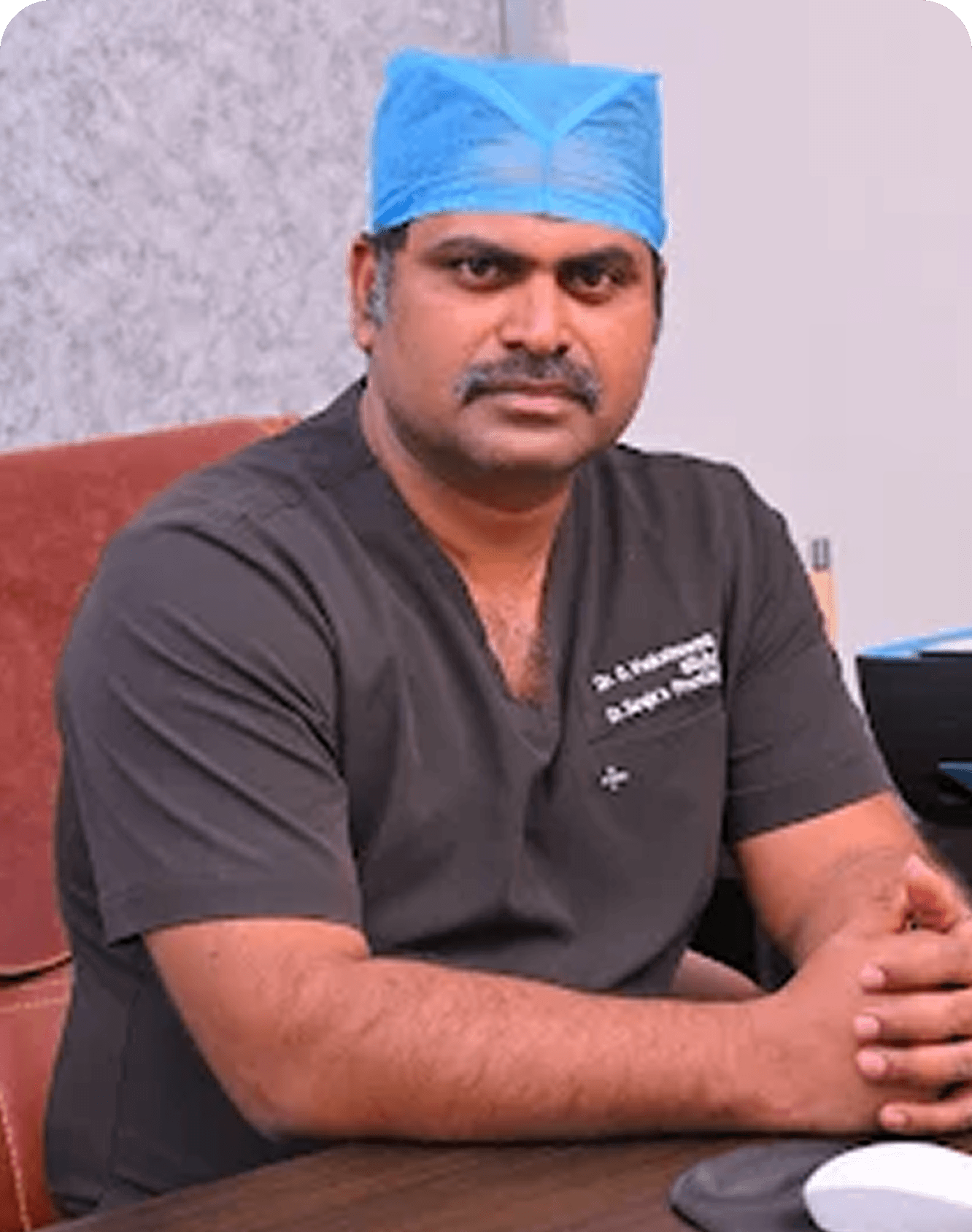
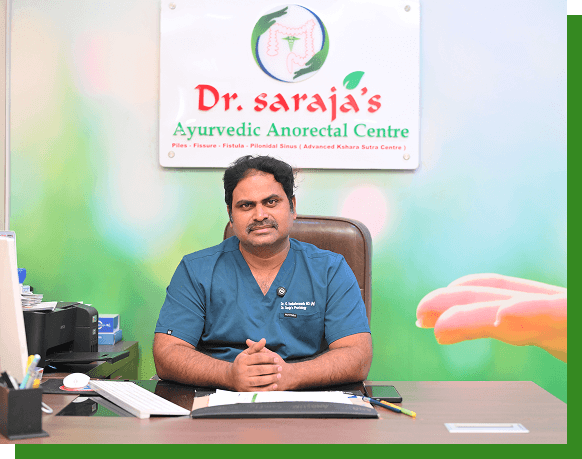
Chief Ayurvedic Proctologist & Kshara Sutra Specialist
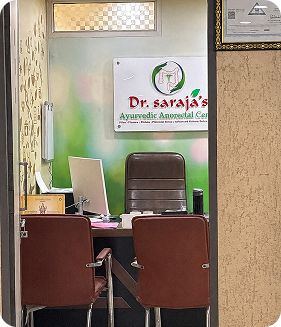
Flat No. 302, Abhinandana Jewel, Lanco Hills Road, Opp. HP Gas Godown, Shivapuri Colony, Muppas Panchavati Colony, Manikonda, Hyderabad, Telangana - 500089
Metro Pillar No. 817, People's Hospital Complex, 3rd Floor, Beside Narayana Junior College, KPHB, Kukatpally, Hyderabad, Telangana - 500072
Discover the heartwarming healing journeys of our patients at Dr. Saraja’s Ayurvedic Anorectal Hospital. Their experiences reflect our commitment to personalised Ayurvedic care, compassionate treatment, and lasting healing.
The treatment was simple, comfortable and the doctor explained every step clearly. I feel much better now.
NareshGoogle ReviewProfessional consultation and good follow-up. I would recommend the clinic to anyone looking for expert care.
RameshGoogle ReviewThe treatment was simple, comfortable and the doctor explained every step clearly. I feel much better now.
PrasadGoogle ReviewProfessional consultation and good follow-up. I would recommend the clinic to anyone looking for expert care.
GopiGoogle ReviewSpeak with our care team and schedule a private consultation at your preferred
Hyderabad centre.